Back
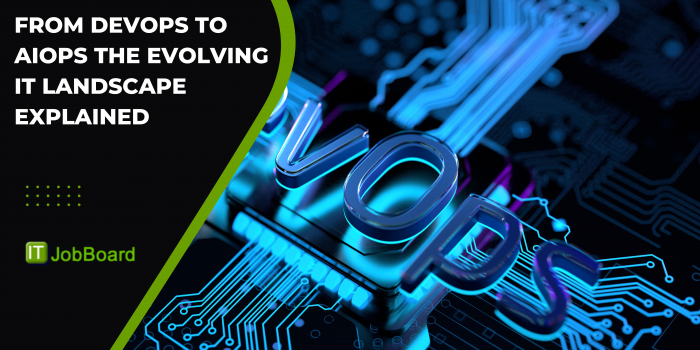
From DevOps to AIOps | Future of IT Jobs UK & Career Trends
25/09/2025
The technology field is changing at a rapid pace, and this is especially true when you look at the shift from DevOps to AIOps. For people looking at IT jobs UK, it is going to be extremely important to understand this transition to remain competitive within a rapidly changing marketplace. Employers and recruiters on every major IT job board are looking for professionals who can keep up and use automation, AI, and data-driven discovery.
What are DevOps?
DevOps was created as a method to reduce silos between development and operations teams. The goals of DevOps are:
- Faster software delivery cycles
- Greater collaboration across teams
- Continuous integration and deployment (CI/CD) pipelines
- Increased scalability and reliability
DevOps quickly became a standard skill set listed across the IT jobs UK, particularly in the job descriptions of cloud engineers, site reliability engineers, and system administrators.
Utilizing AIOps: The Next Phase in IT
As systems become more intricate, traditional DevOps methods may not be adequate. AIOps (Artificial Intelligence for IT Operations) brings advanced machine learning and big data analytics to IT management. It allows organizations to:
- Automate incident detection and remediation
- Predict system failures before they happen
- Analyze vast amounts of IT operations data in real-time
- Improve system uptime and performance
You can now find roles requesting AIOps knowledge on any leading IT job board. These roles are prominent for IT managers, Data engineers, and automation roles.
Why This Matters for IT Roles in the UK
More Opportunities to Grow Your Career – Development of cloud, AI, and automation skills is growing new job roles across various industries.
Increased Salary Potential – AIOps roles frequently pay higher salaries than standard IT support and DevOps roles.
Skills That Will Future Proof You – Employers want candidates that understand the basics of DevOps and an understanding of AIOps potential application.
Evolving Demand Across Industries – In the UK, finance, healthcare, retail, and logistics are seeking to hire these new IT roles.
Skills Required for Shifting from DevOps to AIOps
Programming and Scripting: Python, Java, Shell scripting
AI and Machine Learning Knowledge: Knowledge of data models and ML frameworks
Cloud Platforms: AWS, Azure, Google Cloud
Monitoring Tools: Splunk, Dynatrace, Datadog
Problem-Solving Mindset: Ability to leverage analytics to address an IT problem proactively.
Career Tips in Reality
Keep learning about new AIOps tools and platforms.
When you apply on an IT job board, make sure to showcase your DevOps and automation skills on your resume.
Obtain certifications in cloud computing, machine learning, and/or IT automation.
Participate in an open-source AIOps project so you can get hands-on project experience and make contributions.
Final thoughts
The transition from Devops to AIOps is changing the next iteration of IT jobs across the UK. With automation, AI, and advanced analytics integrated into the workplace, professionals can land future-proofed jobs with attractive growth potential. As you are browsing an IT job board for your next career path or thinking about how to map out your IT career, you should begin to invest in these emerging skills.
FAQs & Answers
1. What is DevOps and why is it important in IT jobs?
DevOps is a set of practices designed to break down silos between software development and operations teams. It focuses on continuous integration and deployment (CI/CD), faster software delivery cycles, improved collaboration, scalability, and reliability. DevOps skills are widely sought in UK IT job markets, especially for roles like cloud engineers and site reliability engineers.
2. What is AIOps and how does it differ from DevOps?
AIOps (Artificial Intelligence for IT Operations) uses machine learning and real-time analytics to automate tasks like incident detection, prediction of system failures, and handling large operational data. Unlike traditional DevOps, which relies on manual and scripted processes, AIOps introduces AI-driven automation to boost efficiency and reduce downtime.
3. Why is the shift from DevOps to AIOps significant for UK IT careers?
As IT systems grow more complex, AIOps becomes essential for organisations to process operational data at scale and anticipate issues before they impact users. UK employers are increasingly valuing candidates with both DevOps fundamentals and AIOps-related automation and analytics skills, which can help future-proof your career.
4. What skills are needed to move from a DevOps role to AIOps?
Key skills for transitioning include:
- Programming & scripting: Python, Java, Shell
- AI & machine learning basics
- Cloud platforms: AWS, Azure, Google Cloud
- Monitoring tools: Datadog, Splunk, Dynatrace
- Analytical problem-solving mindset
These skills help align DevOps experience with AIOps requirements.
5. What is the job outlook for DevOps roles in the UK?
DevOps remains a growing and in-demand IT career path in the UK, with thousands of job postings annually. Median salaries for DevOps roles in England are around £70,000 per year, with variations depending on experience and location.
6. Are AIOps jobs well-paid compared to DevOps roles in the UK?
AIOps roles can command competitive salaries in the UK IT market. Recent job data indicates that the median annual salary for AIOps-skilled roles in England is around £100,000, reflecting strong demand for advanced automation and analytics competencies.
7. How can I prepare for a future in AIOps or advanced IT roles?
To prepare for future IT careers:
- Keep learning about emerging automation and AI tools
- Build experience with cloud computing and monitoring platforms
- Obtain certifications in AI, cloud, or DevOps/AIOps areas
- Showcase skills in automation and data-driven operations on your CV
This proactive approach helps you stay competitive as job trends shift toward AI-enhanced roles.